.svg)


Get in Touch
Recent posts

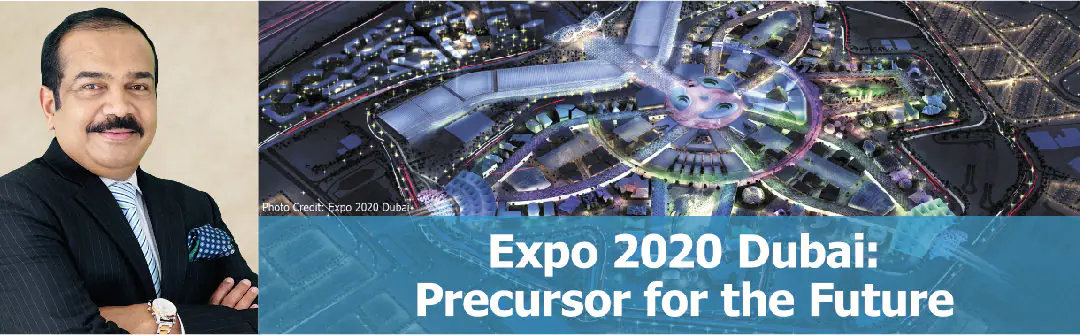
 Sudhir Kumar, Senior Partner & Head of Corporate Communications - Kreston Menon and Director - Kreston Global Board
World’s Mega Event
The UAE has taken the global center stage with the opening of Expo 2020 Dubai which is termed rightly as the extravaganza of business, technology, connectivity, and culture. One may wonder on the long term objectivity of this mega event, but the policymakers of the UAE are confident about the long term economic legacy the Expo is bound to create.
With 191 country pavilions and themed exhibitions at the Opportunity, Mobility and Sustainability pavilions, the eagerly awaited Expo 2020 Dubai is expected to draw in more than 25 million visitors.
Many countries and large companies are looking to the expo, which is the first major global event open to visitors since the pandemic, to spur economic activity and boost investor confidence.
Expo 2020 Dubai will showcase the latest and boldest innovations across the globe and will be a platform to present solutions to the future for the world in quest for remedies.
UAE – Today and Future
UAE’s approach to future and progress are reflected in the words of His Highness Sheikh Mohammed Bin Rashid Al Maktoum, Prime Minister of the UAE and Ruler of Dubai, “The future belongs to those who can imagine it, design it, and execute it. It isn’t something you await, but rather create.”
The UAE has set its target high to be the numero uno in all the competitive indexes by the centennial anniversary of the Union in 2071. The aspiring national strategy “Towards the next 50” aims to represent the UAE’s next 50 years, building on the foundation of the progress made in the past 50 years.
The roadmap chartered by the UAE for the future includes visionary initiatives like the UAE Centennial Plan 2071, Food Security Strategy 2051, Dubai Clean Energy Strategy, Fujairah 2040 plan, National Advanced Sciences Agenda 2031, Abu Dhabi Economic Vision 2030, Environment Vision 2030, Dubai Industrial Strategy 2031, Plan Abu Dhabi 2030, Dubai 2040 Urban Master Plan, United Global Emirates and Make it in the Emirates and these programs will be guided by the recently announced ‘Principles of the 50′.
Currently, the UAE is placed very high on World Bank’s annual ease of doing business ranking and is always streamlining the processes to better the position. The UAE is the only Arab Country to be listed in the top 10 competitive countries for 4 consecutive years. Dubai has been ranked the fifth best city in the world and was hailed for its innovation, infrastructure, iconic landmarks and world class entertainment.
The credit of the UAE being ranked third among 27 emerging global economies goes to the leadership’s long term strategies on being a testbed for imagining, designing and executing future innovations.
The economic and political environments which are highly conducive for businesses to thrive make the nation a favourable destination for enterprises across the spectrum – from large multinational conglomerates, small and medium businesses to fleet-footed, innovative startups.
The decisive economic measures and new amendments to the residency and investment legislations initiated by the leadership of UAE has stimulated the flow of foreign investments into the country.
The word ‘futuristic’ has become synonymous with the UAE, as a country that not only embraces the future, but courageously create it!
Expo and the UAE Economy
The positive impact of Expo 2020 Dubai, which is arguably the world’s largest event is already visible in almost all the spheres of life, especially among businesses in the UAE. The local businesses are showing immense confidence and strong optimism and the immediate results are seen in key sectors such as travel and tourism and hospitality, with the influx of foreign visitors arriving for the mega event.
The global investment forums, investor pitching conferences and the networking opportunities at the Expo 2020 Dubai is set to create lot of investment interests from across the globe. Even if 0.5% of the visitors decide to invest in businesses in the UAE, we are talking about 125,000 new set ups!
The International Monetary Fund (IMF) has forecasted an economic growth of 3.1% this year for the country, which is higher than the Central Bank’s estimate which projected that the UAE economy will expand 2.1% this year.
The second-biggest Arab economy is expected to reap benefits of the Expo for the next nine years as the Expo legacy is going to drive more international investments. Expo 2020 is expected to give a significant boost of USD33 billion to the UAE economy and is estimated to add more than 900,000 jobs between 2013 (Expo awarded year) and 2031.
UAE’s banking assets are expected to grow by 10% next year, as the Expo has given a much needed impetus to the UAE economy, while other economies are still trying hard to recover from the pandemic-driven slowdown.
A diversified portfolio of public-private partnership (PPP) projects worth more than 25 billion Dirhams was recently announced by Dubai on the sidelines of Expo, which includes projects in the urban development, road and transport as well as health and safety sectors. It is noteworthy that the total value of Dubai’s existing and announced PPP projects now exceeds 65 billion Dirhams. In addition to the fiscal benefits, PPP is a way forward in involving private capital for economic diversification, attracting FDI and promoting local businesses and start-ups, thus help Dubai in creating a sustainable economic growth model.

As the stage is set with the 100% foreign ownership legislation, the visa reforms, ease of arbitration and excellent infrastructure, Dubai is set to see a transformation of industries from fintech to food production. Foreign investments are expected in key sectors particularly those associated with the knowledge economy and advanced technologies which includes Artificial Intelligence, the Internet of Things, Blockchain, innovative medical technologies, high-speed transportation, augmented virtual reality, self-driving cars and renewable energy.
The Expo 2020 will definitely attract more investment and talent to Dubai and the UAE, as this mega show will be showcasing the exciting opportunities not only for entrepreneurs and businesses but also for creative and innovative individuals.
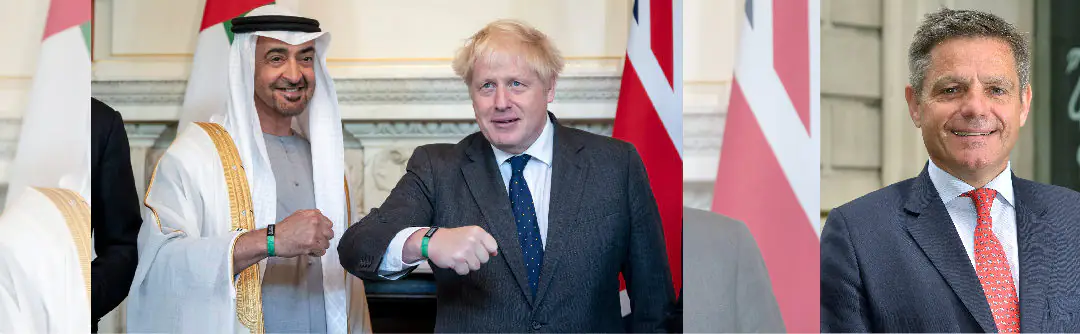 H.E. Simon Penney, Her Majesty’s Trade Commissioner for the Middle East and Her Majesty’s Consul General to Dubai and the Northern Emirates
The UK and the UAE share a deep and enduring friendship, built on decades of economic, cultural and people to people ties. This friendship, and the history that we share, lay the foundations for our future relationship.
The UK stands shoulder to shoulder with the UAE as the nation celebrates its 50th year, and looks ahead to the next fifty years. This is why the Partnership for the Future is so important. The Partnership for the Future was announced in September by Prime Minister Boris Johnson and HH Sheikh Mohamed bin Zayed, Crown Prince of Abu Dhabi and Deputy Supreme Commander of the UAE Armed Forces during His Highness the Crown Prince’s visit to the UK.
I was honoured to have taken part in the visit which saw a wide ranging programme of engagement including a business reception at No10 Downing Street, lunch with the Prime Minister, and a number of bilateral Ministerial meetings over two days. One personal highlight for me was seeing His Highness inspecting the guard of honour on Horse Guards Parade.
A Partnership for the Future
The Partnership for the Future encompasses many areas of collaboration from trade and investment to climate change and energy transition to artificial intelligence. At its core, the Partnership addresses two central pillars of great importance to the UK and the UAE: sustainable prosperity and addressing global issues.
Within trade and investment, our countries extended the existing UAE-UK Sovereign Investment Partnership (SIP) signed in March of this year by the UK’s Office for Investment and Mubadala Investment Company. In addition to the £1bn committed when the SIP was launched in March 2021, a further £9bn investment was agreed during the Crown Prince’s visit taking the total to £10bn.
The SIP will serve as the framework of our future-focused investment relationship. Over a five-year period, the SIP will invest across four key innovation-led sectors – technology, infrastructure, healthcare & life sciences, and clean & renewable energy – that will support job creation in both countries, strengthen national research and development capabilities and originate new areas of investment collaboration. These sectors were selected because they are of strategic importance to both countries as we address the challenges of today and tomorrow. Indeed, the UAE has already committed over £1.1bn across 12 transactions and we have visibility on a further £1bn this year, taking 2021 investment to over £2bn.
The UAE will gain access to world leading R&D in the UK. It provides a channel for the UAE to invest in tomorrow’s unicorns as well as encouraging more UK firms to establish a presence in the UAE in sectors that matter to the UAE’s economic plans.
For the UK, which is the leading destination for investment in new projects in Europe (EY UK Atrractiveness Report, June 2021), the SIP will provide much needed investment to drive R&D, provide a further source of growth capital for emerging firms, and ensure UAE investment aligns with UK priorities of attracting investment to all four corners of the UK.
A major focus of the SIP is identifying opportunities that benefit the whole of the UK, particularly outside London and the South East including Scotland, Wales and Northern Ireland. Greater investment in the UK’s industries of the future will create high-value jobs, boost the economy and level up the country as we build back better and greener.
Creating trade and investment foundations for the next 50 years
As the UAE celebrates its 50th year, the exchange of knowledge, innovation and ideas resulting from the Sovereign Investment Partnership will lay the groundwork as the nation looks ahead to the next 50 years.
The UAE’s Principles of the 50 is the strategic roadmap for the next fifty years, and hold important synergies with the UK’s levelling up agenda and our strategy to Build Back Better. Part of the Principles of the 50 includes the 10×10 goal to increase the UAE’s exports to ten key global markets – including the UK – by 10% per annum for ten years, and we look forward to supporting businesses in the UAE to achieve this.
While 2020 saw a drop in global trade figures, I look forward to the resumption of strong trade between the UK and the UAE, which saw a total of £18.6bn of bilateral trade in 2019.
When you look at the UAE’s economic roadmap for the coming decades and the UK’s growth industries, there’s a clear opportunity for our nations to be deeply linked as trade, investment and innovation partners.
Innovating for a Shared Future at Expo 2020 Dubai
This is clearly in evidence when we look at the UK’s engagement in Expo 2020 Dubai. Not only did the UK openly support Dubai’s bid for Expo 2020 back in 2011, it was also host to the Great Exhibition in 1851, the very first Expo if you will.
We are extremely proud of the UK Pavilion at Expo 2020 Dubai, and I am delighted to share some highlights with Kreston Menon News.

The building itself was conceptualised by Es Devlin OBE, and inspired by one of Stephen Hawking’s final projects, ‘Breakthrough Message’, where Hawking challenged the world to design a message representing Earth, life and humanity that could potentially be understood by another civilisation with the aim of encouraging us to think together as one world. Devlin took the concept further, drawing on the UAE and the UK’s shared history of poetry. Her idea was to invite humanity to create a poem using the power of Artificial Intelligence that could be beamed to outer space from Dubai.
Innovating for a Shared Future is the UK’s theme at Expo 2020 Dubai, and Artificial Intelligence underpins the UK Pavilion’s offer. The Pavilion will display AI technology first-hand, using a bespoke algorithm to generate poetry from contributed words. Crafted and designed by thought leaders and industry experts, and trained with thousands of poems, this unique technology will demonstrate the power of UK AI innovation.
Among the most notable elements of the UK Pavilion during the six-month long Expo will be the immersive Choral Space, where visitors will be surrounded by the Soundscape: music, voices and sounds donated from around the world. Visitors can contribute a word to the poem generated by our AI algorithm, which will be on display at the UK Pavilion. The poem will be known as the Collective Message and I hope all Kreston Menon readers will contribute to it, in person or virtually.
The UK Pavilion structure is simply stunning, and a truly accurate representation of Devlin’s vision.
Breakthrough Moments
The power of innovation is the driver behind the UK Pavilion’s Breakthrough Moments – a series of eight thought-provoking questions about our future designed to spark discussion around the world’s most pressing issues. These eight questions – which include How will we Travel?, What will we Eat? and How will we Thrive? – form the foundations of our programme, which will comprise exhibitions, panel discussions, seminars, podcasts, summits and much, much more.
Speakers from the UK and across the globe have been invited to contribute to the Breakthrough Moments, which will feature leaders and experts from a wide range of industries including fashion, design, technology and sustainability, showcasing the best of UK innovation. The UK Pavilion’s contribution will be presented alongside the 191 nations participating at Expo 2020 Dubai. Find out more about the Breakthrough Moments on the UK Pavilion website.
All this and more await you at the UK Pavilion.
I hope to see you there.
Photo Credit: WAM.ae
 Pushpakaran Parambath, Senior Partner - Kreston Menon Corporate Services
UAE Government decided to grant investors a ten-year residency visa, as well as to grant residency visas of up to 10 years for specialists in the medical, scientific, research and technical fields, and for scientists and creative talents of culture and arts, including their spouses and children. The decision aims to maintain the position of the UAE as an optimal business environment.

- The amount invested should be wholly owned by the investor and not loaned and should be proven by supporting documents.
- Investment retention for at least 3 years
- A standard financial liability with a financial solvency not exceeding Dh10 million
- The long-term visa could also be extended to include business partners, provided that each partner contributes Dh10 million, the spouse and the children, as well as one executive director and one advisor
- The decision allows investors to enter the country for a six-month period, multiple entry, to apply for the long-term visa requirements
- Holder of a PhD degree from one of the top 500 universities in the world
- Holder of an award or certificates of appreciation for the work in the applicant’s jurisdiction
- Contribution to a major scientific research related to the work of the applicant
- Published articles or scientific books in distinguished publications in the field of work of the applicant
- Membership in an organisation related to the work of the applicant, which requires excellent work to accept membership
- A PhD degree in addition to 10-year professional experience in the applicant’s field of work
- Specialisation in areas of priority to the UAE (additional requirement for the doctor)
- Be able to substantiate the experience as an entrepreneur
- Have been a majority shareholder of a start-up or a member of its senior leadership
- Be willing to relocate to the UAE and legally establish a business in one of the seven emirates
- Have a business idea or a business plan that you wish to bring to life in the UAE
- Enter the country for a period of six months with a multiple-entry visa, to facilitate the procedures of establishing the business.
- Nominate up to three of his business’s senior staff to obtain residency.
- All visa holders will be allowed to sponsor their dependents subject to the conditions and requirements as set out by the Federal Authority for Identity and Citizenship.
- Invest in a property worth AED 2 million
- Have financial savings of not less than AED 1 million
- Have an active income of not less than AED 20,000 per month
- Possess a passport with a minimum validity of six months.
- Have health insurance with UAE coverage validity.
- Show proof of employment from their current employer with a one-year contract validity, a minimum of $5,000 monthly salary, and must furnish the previous months’ pay-slip as well as three months of bank statements.
- If the applicant is a company owner, then they must show proof of ownership of the company for at least a year, along with an average monthly income of $5,000 supported by three months of bank statements.
- Investors
- Doctors
- Specialists
- Inventors
- Scientists
- Intellectuals
- Individuals with creative talents
- An investor must own a property in the UAE.
- A doctor or specialist must be specialized in a scientific discipline of high demand in the UAE, and must have acknowledged scientific contributions and practical experience of not less than 10 years. He/she must have a membership in a reputable organization in the field of specialization.
- A scientist is required to be an active researcher either at a university, research centre or in the private sector. He/she must have practical experience of not less than 10 years in the same field and must have contributed to the said field. He/she must also have a recommendation letter from a recognised scientific institution in the UAE.
- An inventor must have one or more patents that are approved by the UAE’s Ministry of Economy (MoE) or any other reputable international body. He/she must also have a recommendation letter from MoE.
- Intellectuals and other individuals with creative talent/s should be pioneers in the field of art and culture and must have won at least one international award. A recommendation letter from related government entities is required as well.
- Take the oath of allegiance and loyalty to the UAE
- Commit to abide by the UAE’s laws
- Inform the UAE government entity, in case of acquiring or losing any other citizenship.
- The citizenship can be withdrawn upon breach of the conditions
- He/she shall renounce his/her nationality of origin or any other nationality he/she holds.
- He/she shall be proficient in Arabic.
- He/she shall have a lawful source of income.
- He/she shall hold an educational qualification.
- He/she shall be of good reputation and good conduct.
- He/she shall not have been convicted for a felony or misdemeanour involving moral turpitude or dishonesty, unless rehabilitated.
- He/she shall obtain security approval.
- He/she shall swear allegiance to the UAE.
 Surandar Jesrani, CEO & Managing Partner - MMJS Consulting
- Transaction listing in the template shared by FTA – Format is periodically updated.
- Audit questionnaire (contains 30-35 questions) – Needs to be filled very precisely as it gives high level understanding of business to the FTA.
- Brief note on business activities capturing nature and process of sale and purchase transactions.
- List of categories of income received since registration and its VAT treatment.
- Sample tax documents such as tax invoices, tax credit notes, import declarations, etc.
- Full trial balance and audited financial statements (if any)
- Reconciliation of VAT returns with the trial balance.
- Corporate group structure including all branches and locations.
- Input tax apportionment – method used and calculation.

- Greater comfort for filed returns in case of a challenge from the authorities and more clarity on remedial measures.
- Identify the areas where private clarification/ administrative exceptions from the FTA, in case of any ambiguous tax treatment, is needed.
- Rectify past errors by way of filing Voluntary Disclosure (if needed) before the start of audit and avail the benefit of reduced penalties under the recent Cabinet Resolution No. (49) of 2021.
- Identify whether Amnesty scheme can be availed under the recent Cabinet Resolution No. (49) of 2021.
How to Prepare for VAT Audit: Businesses are advised to undertake following steps to prepare themselves for VAT audits:
- Pre-audit review of historical tax periods (VAT health check) from an external consultant.
- Obtain private clarification/ administrative exceptions from the FTA, in case of any ambiguous tax treatment.
- Rectification of past errors by way of filing Voluntary Disclosure (if needed) before the start of audit to avoid the incremental late payment penalty.
- Preparing the team and management for audit (it is recommended to assign a single point of contact within the organization to communicate with the FTA).
 Virginia Cook, Marketing Director - Kreston Global


 His Excellency Omar Ahmed, Suwaina Al Suwaidi
When His Highness Sheikh Mohammed bin Rashid Al Maktoum, Vice President and Prime Minister of the UAE and Ruler of Dubai, launched the UAE’s National Strategy for Industry and Advanced Technology earlier this year, he ushered in a new era.
Known as Operation 300bn, the strategy provides a clear roadmap for the UAE to become a world-leading industrial hub within the next decade. With its focus on developing our capabilities in industries of the future like space, green hydrogen and biotechnology, the announcement instantly attracted widespread attention from a swathe of international investors, policymakers and commentators. The consensus that emerged was that this latest – in a long line – of bold moves from the UAE’s leadership, marked a quantum leap for the nation’s industrial sector.
At its heart, the strategy aims to increase the industrial sector’s GDP contribution to AED300 billion by 2031 by accelerating the adoption of advanced technology across the value chain. This, we firmly believe, will boost productivity, generate added in-country value, create a raft of new, highly skilled jobs for the nation’s emerging talents, further diversify our economy and enhance global competitiveness.
In short, we are setting out to transform the industrial sector into a key driver of sustainable growth – and a pillar of the national economy. We will turbocharge existing industries where we have an established presence, and we will venture to new frontiers by leveraging advanced technologies and Fourth Industrial Revolution (4IR) solutions and applications. We will research what the future could look like, and we will develop the technologies to take us there.
Under the new strategy, innovation will not be a mere buzzword. It will be our de facto approach to industry as we cultivate a culture of ingenuity and entrepreneurship, and encourage everyone, from around the world, to come and make it in The Emirates.
Solid Grounds
Though it sets a new tone for the UAE, this strategy was not developed out of the blue. Boasting the strongest credit ratings in the region, the UAE has long enjoyed investment safe haven status, with enviable economic stability and a promising growth landscape; bolstered by its strategic location, robust financial reserves, huge sovereign wealth funds, and sustainable government spending that ensures a healthy economic cycle.
Energy resources and raw materials required for industrial use are also available at competitive costs. Furthermore, UAE-based manufacturers can take advantage of laws that guarantee full ownership rights for foreigners in 122 economic activities across 13 sectors – soon to be expanded to cover the majority of industrial sectors – which will come into full effect as of 1 June 2021. Combine this with zero percent corporation tax and a wealth of accessible geographic locations and specific business zones ready to boost further industrial development, and it is easy to see why so many global, regional and local manufacturers were already developing their businesses in the UAE. Simply put, the UAE is an ideal strategic market for the world’s most innovative companies, reached new levels of high-tech excellence worldwide.
An Appealing Business Landscape
As part of our journey towards enhanced economic diversification, the UAE has long sought to develop policies, procedures and practices that foster the growth of both the national economy and the private sector.
Our efforts here speak for themselves. The UAE is consistently ranked among the top countries around the world in key economic competitiveness and ease of doing business indices. This is largely as a result of the many incentives, legal and logistical facilities, and collaborative regulatory environment we have introduced for businesses over the years. The results speak for themselves; we are proud to support a stable private sector with an ambitious growth agenda.
The UAE has a transport and logistics ecosystem that’s considered the most efficient and comprehensive in the region, and one of the easiest to reach from anywhere in the world, via 10 airports and 12 seaports. With a handling capability of more than 17 million tons annually and a cargo capacity of 80 million tons, the UAE sits at the intersection of Asia, Europe and Africa, giving its manufacturers easy access to markets where more than five billion people live.
Enabling Operation 300bn
The Ministry of Industry and Advanced Technology will be the enabler of Operation 300bn. We will be responsible for developing legislative and regulatory frameworks, providing energy at competitive prices, and developing an advanced technology roadmap, a framework for research and development (R&D), and launching the National In-Country Value (ICV) program.
The ICV program is a core component of the UAE’s industrial transformation. It aims to redirect expenditure on procuring goods and services into the national economy. In parallel, the metrology standards developed by Ministry will ensure local industrial infrastructure meets international standards and enable the ICV Program to enhance the competitiveness of local products and services and boost collaboration between the public and private sectors.
To achieve these targets, industry players should prepare to work with the Ministry on the adoption of new and updated industrial laws, the roll-out of digital platforms for services and licensing, the promotion of locally produced goods and the enablement of an R&D ecosystem.
Priority Sectors
The strategy leaves no single industry behind but has established a framework through which the current industrial landscape can continue to thrive. Industries with existing national significance, such as energy, petrochemicals, plastics, heavy industries and manufacturing; strategic industries that aim to enhance economic resilience and reduce dependence on global supply chains, such as food, water, agriculture and healthcare; and future industries, such as space, biotechnology, medical technology, sustainable products and sectors that can be supported by 4IR applications.
Enabling these sectors and facilitating the entry of innovators and investors are some of the key pillars of the strategy. Furthermore, the role of the Emirates Development Bank (EDB) as the financial engine of the strategy is crucial. By 2025, the bank will expand its financing portfolio to AED30 billion to support entrepreneurs, startups, SMEs and large corporates, who will help spur the nation’s transition to a knowledge-based economy.
Make It In The Emirates: Gateway To The Future
The strategy is complemented by the first-of-its-kind industrial campaign, ‘Make it in The Emirates’. It’s an open invitation to investors, industrialists and innovators to participate in the growth of the industrial sector in the UAE. The UAE has always been a land of opportunity for those with the talent and imagination to realize their dreams. Our investment environment and openness to global markets and competitive advantages ensure a capital-rich landscape for the industry-minded creator. Consider this your invitation to come and make it in The Emirates. It’s your opportunity to engage with the ministry and to invest in a forward-thinking, industrious, global future.




