.svg)


Get in Touch
Recent posts

 Surandar Jesrani, CEO & Managing Partner - MMJS Consulting
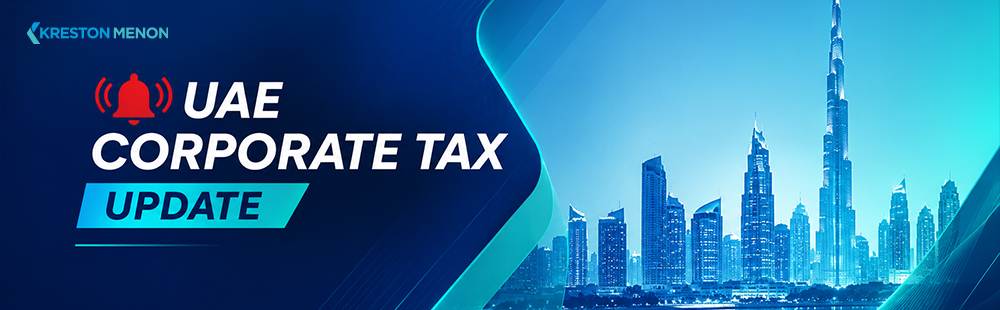
Following an announcement on 31 January 2022, the UAE Government released Federal Decree Law No. 47 of 2022 on Taxation of Corporations and Businesses (UAE CT Law) on 9 December 2022. This follows a first of its kind public consultation drive which began on 28 April 2022 seeking feedback from stakeholders on key features and principles of the planned UAE CT regime. The UAE CT Law has been supplemented by 158 Frequently Asked Questions (FAQs) which provide further guidance regarding the intent and principles of the legislation.
Though largely in line with principles contained in the public consultation document, provisions contained in UAE CT Law have addressed issues on key aspects which is indicative of the positive approach of the UAE Government for implementing a cohesive, straightforward and transparent legislative framework.
UAE CT is applicable on taxable income of resident and non-resident persons for financial years beginning on or after 1 June 2023. UAE CT will be applied at a rate of 0 percent on taxable income upto AED 375,000 and a general rate of 9 percent for taxable income above AED 375,000. Resident entities are taxable on worldwide income whereas non-residents would be taxable on UAE sourced income which could include income from a resident in the UAE, income derived from the UAE or income from activities performed or benefitted in the UAE.
The personal income of natural persons has been kept outside the scope of UAE CT, however, business income of individuals is within the ambit of UAE CT. The meaning of business and commercial activities in respect of natural persons would be notified in a separate Cabinet Decision.
UAE CT Law provides for exemptions for businesses engaged in extraction of natural resources, Government and Government controlled entities, charities and public benefit entities, investment funds, pension and social security funds, subject to conditions. Certain exempted categories are required to claim the exemption through an application process to be notified.
Free Zones are a key economic driver for the UAE and this fact has been appropriately addressed in the UAE CT regime through an incentive to Free Zone registered persons being taxed at the rate of 0 percent on Qualifying Income. Qualifying Income would be detailed in a specific Cabinet Decision which is expected imminently at the time of going to press. However the Free Zone Person incentive carries stringent conditions including maintaining substance in the Free Zone License, satisfying transfer pricing requirements and other compliances. These conditions may not be straightforward for many businesses to comply given existing holding structures, business models and operations.
Provisions for taxable income and its computation largely follow internationally accepted best practices including exemptions to dividends from domestic companies and participation interests, a cap on net interest deduction at 30 percent of EBITDA and a cap on business entertainment expenses at 50 percent. Reliefs for small businesses, intra-group transactions and restructuring has been provided. It is important to note that UAE CT Law explicitly states that expenditure is deductible only if it is incurred exclusively for business purposes and accordingly, expenditure which is personal in nature, or incurred for exempt or incentivized income may not be deductible.
The parent entity of a resident group of companies can make an application to form a tax group with its UAE subsidiaries, subject to meeting strict conditions. These conditions include a 95 percent ownership requirement and neither the parent nor a subsidiary can be an exempt or a Qualifying Free Zone person. The parent company of a tax group is responsible for administrative mandates under law and would submit a single tax return.
The UAE CT Law has been generous in respect of tax losses providing for indefinite carry forward for setoff against future taxable income capped at 75 percent of such taxable income provided certain conditions are met. Tax losses may also be transferred between resident companies with 75 percent common shareholding subject to the specified cap for set-off.
Persons subject to UAE CT are mandated to register with the Federal Tax Authority (FTA) and obtain a Tax Registration Number. Early bird registrations have been activated by the FTA on the Emara Tax portal. However, it is understood from authorities that a registration should be obtained prior to filing of tax returns.
All Taxable Persons subject to UAE CT, including Qualifying Free Zone Persons, will be required to file a tax return and pay any due tax within 9 months from the end of a tax year (which is the current financial year followed by such taxpayers).
As per Law, transactions with associated enterprises (related parties) and connected persons are required to comply with the arm’s-length principle which would be in line with OECD Transfer Pricing (TP) Guidelines. However, the definitions of related parties and connected persons are customized to suit the socio-economic climate of UAE and include kinship up to the fourth degree which may trigger TP requirements. UAE CT Law requires UAE businesses to maintain TP documentation which will be prescribed under a Ministerial Decision. TP documentation must be submitted to the FTA within 30 days of a request. Further, all taxpayers would be required to submit a TP disclosure form along with the UAE CT return detailing the controlled transactions of a tax year.
As per UAE CT Law, documentary evidence supporting tax positions taken by the taxpayer should be maintained for at least 7 years from the end the relevant tax year.
Additionally, UAE business may be requested to submit financial statements and other documentary evidence including transfer pricing to the FTA.
UAE CT Law includes a detailed general anti-abuse rule (GAAR) intended to disregard transactions or arrangements undertaken with the purpose of obtaining a tax advantage. GAAR applies from the date of publication of UAE CT Law in the Official Gazette.
As part of transitional provisions, the UAE CT Law also provides that the opening tax balance sheet would be the closing accounting balance sheet for the financial year immediately before the first tax year and should conform to the arm’s length principle.
The impact of a new business law or regime are far-reaching for an economy and considering that tax legislation is relatively new for UAE businesses, additional care should be taken while assessing implications under UAE CT Law. As further details would be forthcoming over the coming months through a series of Ministerial and Cabinet Decisions, businesses should closely monitor developments and prepare for change management well in advance to mitigate the probability of unfavorable outcomes. As part of the run up to the effective date of UAE CT on business activities, investors and entrepreneurs alike may consider assessing the impact of UAE CT on as is basis, structural changes (keeping in mind GAAR), modelling cash flow implications, consider exemption regimes, and developing processes and related procedures to manage compliance.
Natural persons undertaking a business activity should assess whether income earned could be regarded as business or commercial in nature and take steps to structure such activities to be tax efficient.
Every change is an opportunity to become more efficient in the way we do things and I believe this is true even in the case of implementing UAE CT in your business activities.
 H.E. Andrew Tsepo Lebona, Head of Mission & Consul General of South Africa to Dubai and Northern Emirates
ASSALAMU ALAIKUM
My African heritage obliges me to first extend my respect to His Highness Sheikh Mohammed Bin Rashid Al-Maktoum, UAE Vice President, Prime Minister, Ruler of Dubai and his fellow Members of The Supreme Council, Rulers of The Northern Emirates.
I am honoured to be the Consul-General of the Republic of South Africa to Dubai and The Northern Emirates. This is my first diplomatic posting and I suppose seasoned colleagues in the government and diplomatic communities would consider me a ‘newbie’. Thank you all for your warm welcome and kindness.
It has been a whirlwind four months since my arrival and I am enjoying finding my feet and experiencing the vibrancy of Dubai and this interesting and extraordinary part of the world. My first impressions are a kaleidkresoscope of sound and light, diverse nationalities and cultures, amazing architecture, and an abundance of commercial opportunities. It is my great pleasure to kick-off 2023 as Kreston Menon’s first guest article contributor. My aim is to outline South Africa’s economic relations with the UAE, what we can learn from Dubai and my vision for the next four years.
Trade and Investment Partnerships
Economic Diplomacy is a cornerstone of South Africa’s foreign policy as it aims to address the triple challenges of Poverty, Unemployment and Inequality, all a legacy of our apartheid and colonial past. South Africa’s national interests and foreign policy objectives are cushioned in promoting peace, security and economic development on the African continent. South Africa and the UAE have maintained a strong bilateral relationship with a strong economic focus since formal diplomatic ties were first established in 1994.
Trade and Investment are integral parts of our Economic Diplomacy. South Africa occupies a strategic position as Africa’s most industrialised country with its advanced financial systems, modern infrastructure, world class educational institutions and a vibrant Stock Exchange. It provides a valuable springboard for UAE enterprises to invest in the country, the region and the continent within the ambit of the newly-established African Continental Free Trade Area (AfCFTA) flagship project. AfCTA can enhance UAE companies to invest and trade with Africa’s vast sectors in mining, telecommunication, agriculture and financial services with Dubai at the helm.
The UAE is South Africa’s main trading partner within the Gulf Cooperation Council (GCC) countries since both countries agreed in 2016 to work towards considering South Africa as a strategic partner on the African continent and a preferred investment destination.
Further cementing of this relationship was made during President Cyril Ramaphosa’s visits to the UAE, first during his State Visit in 2018 during which numerous Memoranda of Understanding (MOUs) were signed; second was his Working Visit last year during Expo 2020. Great emphasis was placed on bolstering bi-lateral relations particularly in the areas of Tourism, Trade and Investment, High Tech, Renewable Energy, Agriculture and Infrastructure Development.
May I congratulate the Government and people of the Emirate of Dubai for hosting an exceptionally successful Expo 2020. The Official Motto “Connecting Minds, Creating the Future via Sustainability, Mobility and Opportunity” cemented Dubai’s vision of being the global centre of Innovation, Digitalisation, Robotics and Artificial Intelligence. South Africa’s participation provided a significant opportunity to further solidify our economic relationship with the UAE and further develop South Africa’s trade and investment partnerships.
From our Mission in Dubai, one of my responsibilities is to provide leadership to bring substance to our economic relationship on the ground in the areas of Trade Investments and Tourism. This includes renewed engagement with the Northern Emirates, namely Sharjah, Ajman, Umm Al Quwain, Fujairah and Ras Al Khaimah and expanding our ties with them. Although the limelight generally shines on Dubai and Abu Dhabi Emirates, they also present extensive business opportunities for South African enterprises.
According to the South African Business Council (SABCO), there are over 2,400 SA affiliated or registered companies with the Dubai Chambers of Commerce. South Africa has invested ZAR 10 billion in the UAE creating more than 2000 jobs in the petroleum, healthcare and financial services. In turn, the UAE has invested ZAR 1 billion in South Africa creating in excess of 1,500 jobs in the petroleum and new energy sectors.
South Africa will assume the 15th BRICS presidency this year and host the BRICS Summit in the second half of the year. BRICS countries (Brazil, Russia, India, China and South Africa) account for 17% of global trade and 33% of global GDP. South Africa joined this important bloc in December 2010, in line with the country’s foreign policy to strengthen South-South relations. South Africa is also keen to expand membership to include other progressive countries. UAE would be a prime candidate.
Post-Covid19 Economic Reconstruction and Recovery
Our Mission will continue to play a key role in South Africa-UAE relations as part of the South African Government’s implementation of the Economic Reconstruction and Recovery Plan to provide capable and effective public infrastructure development, secure and affordable energy supply and a significant employment stimulus to recover job losses in the aftermath of Covid-19 by creating jobs and supporting livelihoods.
Tourism: Dubai Airport tops the global list for international passenger figures, 25 million in 2022 and the highest aircraft movements exceeding 400,000. As a result of bilateral agreements with Emirates and Etihad to give them access to South Africa’s domestic routes while they promote South Africa abroad, South Africa is well-placed to tap into this hub with Emirates offering direct daily flights to Johannesburg (flagship Airbus A380) and Cape Town and Durban (Boeing 777). Dubai and the Gulf region is an untapped market with huge potential for the high-end income category, corporates and the general population. This partnership is expected to boost visitor arrivals and promote tourism and inbound traffic to South Africa from key markets across the Emirates network.
Agriculture: Dubai, the UAE and the Gulf states are lucrative export markets for South Africa’s agricultural and agro-processing produce. Food security in the UAE is a strategic national priority and that is a great opportunity for South African produce as the country imports 95% of demand.
The Blue Economy: South Africa is the only country on the continent to have two coastal water masses – the Atlantic Ocean on the West and the Indian Ocean on the East. With the importance of Biodiversity and Climate Change and the UAE’s remarkable knowledge base and Future Science pedigree, South Africa can enhance its Maritime Science.
Public service: The embodiment of South Africa’s public service motto “Batho Pele” (The People First), can forge ties with the UAE’s Department of Happiness and Tolerance in promoting a just and functioning society.
Healthcare: With its ailing healthcare system and tremendous challenges especially post-Covid19 pandemic, South Africa can benefit immensely from the example of Dubai’s many state-of-the-art institutions.
Global participation: Dubai will host two strategic global conferences this year – the World Police Summit in March and COP 28 in November. Through our Mission, South Africa’s participation will enhance the country’s activities in combating crime and corruption, and continuing to address the challenges of climate change.
Cultural Diplomacy
Cultural Diplomacy or ‘Soft Power’ brings warmth to bilateral relations. “La Cultura e come l’aria, non ha confine” (Culture is like air, it has no borders). There are 114,000 South African expatriates in the UAE, the majority of them resident in Dubai and operating in the healthcare, hospitality, petroleum and financial sectors. Properly supported, this group can be Goodwill Ambassadors spreading positive stories of our Rainbow nation.
Hosting our very own sensational swimmer Tatjana Schoenmaker, Olympic Gold and World Record Holder would allow her to inspire young Emiratis to excel in swimming.
South African authors have frequently participated in the Emirates Literary Awards with much success. Improving contacts with UAE institutions especially those in Future Science such as Artificial Intelligence, Robotics, Digitalisation, Innovation and Space exploration is top on my list.
In conclusion, it is my fervent desire to see South Africa-UAE relations elevated to a High Level Strategic Partnership focusing on New Energy, Innovation and Future Technology as Dubai remains an unrivalled leader in this domain. Dubai has an immense global stature and a track record that includes its vibrant people and lifestyle. Iconic landmarks that ensure Dubai remains a premium destination are Burj Khalifa, Dubai Fountain, Burj Al Arab, Dubai Mall, The Palm Jumeirah, Museum of the Future, Emirates Airline, Expo City, DWTC, DMCC to name a few. His Highness Sheikh Mohammed Bin Rashid Al-Maktoum has set ambitious goals to make it the most important global business centre. Our Mission in Dubai will continue to play its part in fostering and enhancing South Africa-UAE relations in myriad spheres.
As we move forward in strengthening bi-lateral relations, we are guided by Doctrines of The Founding Fathers of our two nations – elder statesmen His Highness Sheikh Zayed Bin Sultan Al Nahyan and His Excellency President Nelson Mandela.
“Nkosi sikelel’ iAfrika” (God Bless Africa)
 Raju Menon, Chairman and Managing Partner - Kreston Menon


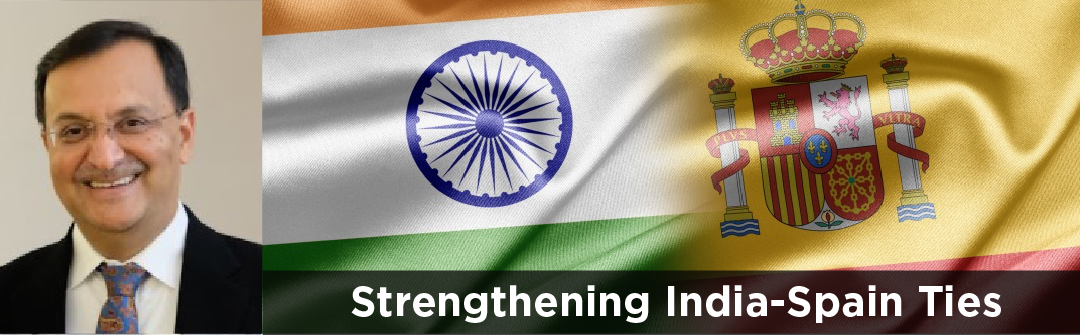 HE Dinesh Kumar Patnaik, Ambassador of India to the Kingdom of Spain
I am delighted that Kreston Global is having their Annual conference in Spain. While the UAE-Spain trade and business corridor is quite active, I would like to talk here a bit about the India-Spain economic & commercial relationship.
India and Spain share a very close relationship, both being strong democracies and without any bilateral, geopolitical irritants. Relations between India and Spain go back to the 20th century and Christopher Colombus, who discovered America, was actually sent by the Spanish Queen to look for a route to India. In 1937, Rabindranath Tagore wrote a Pamphlet titled “Conscience of Humanity”, which appealed to Indians to help in the fight for democracy during the Spanish civil war. In modern times, we established democratic relations in 1956 and today we have a vibrant political and economic relationship, which also encompasses considerable interaction in the field of Education, Science & Technology, Culture and other fields.

Economic & Trade relations have been extremely vibrant and Spain is India´s 6th largest trading partner in the EU. Bilateral trade, which registered a drop of 19 per cent during the pandemic, has rebounded and crossed 2019 figure of US$ 6.5 billion. India has a surplus of about
US$ 3 billion in its trade balance with Spain, but this is offset to a large extent by the large number of Spanish companies present in India who are doing very good business.
There are about 250 Spanish companies in India, with multi-sector presence across infrastructure & construction, auxiliary products and industrial engineering, renewable energy and environmentally sustainable products, EICT (electronic information and communication technologies), automotive components and automotive accessories. Spain has also invested more than US$ 3.56 billion as cumulative FDI in India. Recently, the Ferrovial Group of Spain invested US$ 425 million in the infrastructure sector through Prime Minister’s Gati Shakti Master Plan.
In addition, India has recently signed a major contract with Airbus Spain for procurement of 56 C-295 military transport aircrafts. This is one of the biggest ´Make in India´ contracts signed as 40 of the 56 aircrafts would be completely made in India with almost 13,000 plus parts of the aircrafts to be manufactured and assembled in India. This will see a relocation of the entire supply chain for Aerospace industries, especially for the C-295 aircrafts to India.
As I had mentioned before, India has a surplus in its bilateral trade with Spain with the main items of export being organic chemicals, textiles and garments, steel, fuels & mineral oils, aluminium and other articles, leather and leather goods, marine products, vehicles, auto components, pharmaceutical, pigments, inorganic chemicals, etc.
India has also made considerable investment in Spain of almost US$ 1 billion. There are more than 50 Indian companies in Spain mainly in Software & IT services, automotive parts & automobile industries, pharmaceuticals, chemicals and logistics.
The future looks bright for India-Spain collaboration and there are many sectors in which there is considerable scope for cooperation among entrepreneurs of Spain in India, with a maximum potential being in the start-up business. Spanish entrepreneurship ecosystem increased between 2015 to 2021 from €10 billion to €46 billion. This provides considerable opportunity for start-ups in India to upscale in Spain and Spanish speaking countries as well as for Spanish start-ups to do the same in India. The future is bright for India-Spain relations and companies and organizations active in this corridor, especially in UAE should take advantage of this opportunity.
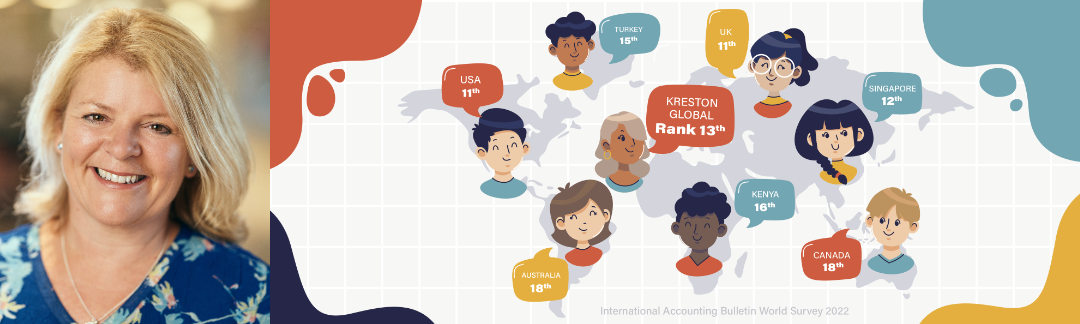 Virginia Cook, Marketing Director - Kreston Global
What Is A Name?
We all have our favourite brands, don’t we? Ones that resonate with us, that speak to us and to whom we are loyal regardless of our “sensible” heads telling us that we could probably find a cheaper or better alternative elsewhere.
But why do we get so “hooked” on certain brands? Have you ever tried to analyse why something generates an “emotional” response when we are able to be very factual and pragmatic about other aspects of our lives?
I quite like this definition of a brand from Investopedia. “A brand is the collective impact or lasting impression from all that is seen, heard, or experienced by customers who encounter a company and its products and services. In creating a brand, a business is managing the effect that the product or service is having on the customer.”
In my younger days, it was always the consumer brands that shaped branding theory (although these days we have incredibly powerful business brands); then it was all about being a “bundle of wants and desires in the mind of the customer.” Either way as we know, it is so much more than the visual. What we talk about now is the “experience” that we, the consumer, have when we use the brand/s that we love.
What do we mean by experience? It is every single activity, online manifestation, printed brochure, customer interaction that had with every part of our product that will create that “lasting impression”; the “collective impact” we seek in a strong and compelling brand. It’s that “managing the effect” as the definition above articulates.
When it comes to professional services brands, what is being “used” or purchased is the deep technical, specialist, business advice that is customised to our clients’ specific problem. So, creating a differentiated brand in this case means ensuring every single point at which our customer interacts with us reinforces those special characteristics. This is really saliant when clients need advice and solutions from different parts of the network. Managing that experience for our clients across international boundaries and jurisdictions is hyper-important.
The word “Kreston” means “responsible, trustworthy” in ancient Greek, and our member firms take that very seriously. Our name is fundamental to the promise our brand offers our clients and the experience we need to give them.
Kreston: Our Whole Is Greater Than The Sum Of Our Parts
As a worldwide network of accounting and business advisory firms, Kreston advisers want to be compelling to ambitious, entrepreneurial, interesting clients who seek to expand their business operations around the world. These sorts of clients want to move fast, need on-the-ground support, and require local savvy business advisers who know how to get the job done, and the right business connections to make that happen. Independent, ambitious, and fiercely entrepreneurial, Kreston firms are ideally placed for clients like these across the world. The key is to manage that experience so that it is consistent and reliable for our clients wherever they are in the world.
Kreston has a powerful backstory that reinforces the drive and energy that exists in the network today. Formed in 1971 by 2 entrepreneurial accountants, one from our German firm, Kreston Bansbach, and one from an English firm, Finnie & Co, that is now part of BDO, these 2 accountants were early pioneers of both an international mindset and the concept of a network of firms around the world who collaborate to help clients expand overseas. Fifty years on, Kreston is an energetic community of like-minded people who love working together to help their clients succeed.
Five Steps to Building a Global Brand
We know from member surveys and feedback that building our global brand is a key priority for our membership.
As a network we have wide and varied audiences. Our people, our firm leadership, our firms’ clients, our potential clients, our potential future recruits and all the people involved in helping us deliver work and value as suppliers and referrers.
That’s a lot of people to try and influence. Which is why we are in this together and we are working on a 5-step programme to build that worldwide global brand.
- A shared vision and ambition – one brand worldwide
- A compelling proposition that unites us – a purpose that we all agree with
- A consistent experience across our people and our clients – online is now king
- A reputation and narrative that is compelling to our clients and our people
- Ambassadors and advocates who help create and spread our culture
There isn’t the space to go into the detail for all these steps now. But we already know our shared ambition is a strong worldwide brand: entrepreneurial firms united in a collegiate, collaborative, community-minded enterprise, fuelling ambition and walking shoulder-to-shoulder with our clients. Our members will hear more in October about our shared vision, ambition, and purpose at our first world conference for 3 years in the wonderful city of Madrid.
Let’s take a closer look at steps 3, 4 and 5 and how we work on these essential areas of the digital challenge, a strong narrative to clients, and engagement of our younger people involved in the network, so they feel a sense of ownership, pride, and opportunity.
Why Digital is King in the Battle for Hearts and Minds
The Covid pandemic changed our lives fundamentally. We were becoming digitally adept, used to doing research online, fact finding, comparing providers. But suddenly in early 2020, that was the only way we could work – the only way we could buy – and the only way we could find out any information. And we haven’t looked back. Statista.com’s April 2022 analysis confirms “As of April 2022, there were five billion internet users worldwide, which is 63 percent of the global population. Of this total, 4.65 billion were social media users.” We will never return to a world where we are not “digital first.”

Although accounting firms may rely heavily on personal recommendations to grow business locally, growing a business regionally and globally takes a robust digital brand. 62% of businesses make decisions about who to do business with using just digital content to make their shortlists (Forrest Group, 2021). There are almost 2 billion websites in the digital landscape. Getting people to come to our websites is important – creating campaigns and stories that are interesting to read and add value to our clients’ research is critical. We have a great bank of client case studies that demonstrate the way that Kreston firms help their clients and regularly send our international clients update on tax, audit, and other international topics of interest.
Lynsey Thornthwaite, Kreston Global Digital Brand and Content Manager, gives us a view of our digital performance so far, “The Kreston Global website is growing rapidly; we have doubled the organic traffic in six months, and we could do that again over the next six months. Watching how users on the website clearly indicates that these new users are in that research phase, top of the funnel. They are navigating through the website, checking the “Doing Business In” pages, then navigating the country firms’ pages.”
“The traffic coming from member websites to the Kreston Global website is a great example of buyer intent in that research phase. The Kreston Menon website is the number one firm website referring traffic to the Kreston Global website. This is due to a combination of offline activity; there is an incredible amount of work going in to raising the profile of the firm – and the online activity, and a simple to navigate website that signposts users through the customer journey effectively. We can see that users from Kreston Menon are finding the journey fluid and the content meets their needs. The audience locations are not just regional, but global and the percentage of those visitors who return is third highest overall, a positive indication of interest and engagement.” Kreston Menon is part of our group of firms who really understand the power of digital engagement.
Understanding the “Interpreneur”
A professional brand stands and falls on the quality of its reputation and the way it shows how it understands its core client buyer. So, we focus a lot on enhancing our reputation with media and content creation. Our global group experts in Corporate and HNWI Tax, VAT, Audit, Transfer Pricing, Global Mobility and Corporate Finance write and publish expert advice to demonstrate our collective knowledge in these areas. This helps our reputation as a strong business advisory brand.
As well as topical and expert content, we have recently commissioned research across 6 main global markets to probe the way in which business owners decide to expand their businesses globally, what challenges they see as key and what are the characteristics found in successful “interpreneurs.”
We call these types of business owners/investors and directors “Interpreneurs,” and the results were fascinating, giving us real insight into what type of geographies, age and gender profile makes a more likely interpreneur and what they want from governments and advisers to help them success.
We will be running a series of podcasts with our advisers and clients looking more closely at the steps to success and have developed a web tool so that clients and prospects can see if they share the characteristics for success.
Ambassadors and Advocates
Our culture is forged and strengthened the more our members interact with each in communities of interest. By building more ambassadors for Kreston through involving our younger people more in the network, we gain so much from their input and energy. It is so important that they can see Kreston as a network of opportunity for future career development, where they can work on interesting and ambitious clients and with enthusiastic committed professionals and peers from around the globe. All of whom are important advocates for the Kreston brand.
We are fortunate to have Kreston Menon in our network as they are true exemplars of what it means to have a strong, strategic brand focus – it is not by chance that they have a recognised “Superbrand” status in the UAE. They are energetic business builders in their own country of course, but through forging strong relationships with government bodies in the region, by investing in an international strategy abroad to get the most out of the network, and by being very supportive and involved in Kreston’s community building activities, they have gained a big following and strong relationships with colleagues across the world in the Kreston network.
“You have to invest to see a return” is the mantra of many business advisers when helping their client to think long-term. This is very much our attitude at Kreston Global – when our firms invest in the network and in helping us to build our global brand – like Kreston Menon – then together we will be stronger, compelling, and connected together by our shared ambition.
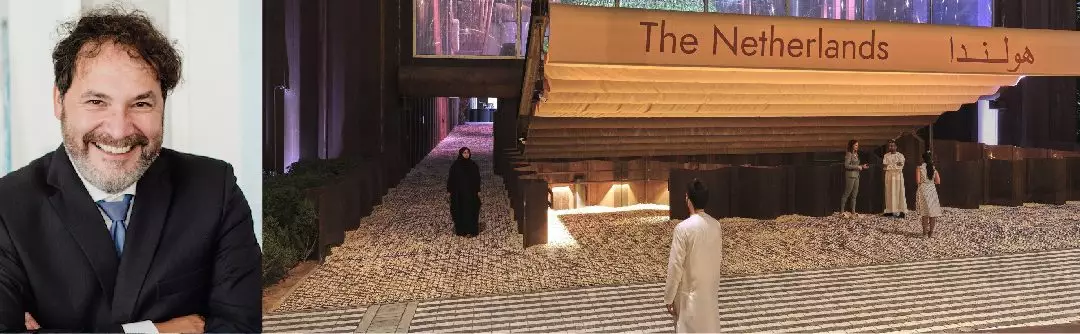 His Excellency Carel Richter, Consul General of the Kingdom of the Netherlands for Dubai & Commissioner General of the Netherlands
This year, 2022, marks fifty years of bilateral relations between the United Arab Emirates and the Kingdom of the Netherlands. Our ties are warm and friendly, and we are full of anticipation for the next fifty years. With our successful Expo 2020 Dubai participation still fresh in mind, we have a lot to look forward to.
Food Security
As I am writing this article, H.E. Minister Mariam Almheiri is heading a trade delegation to the Netherlands, focused on food security and horticulture. More than 30 representatives from the Emirati horticultural sector joined her to visit GreenTech – a leading 3-day horticultural technology exhibition in Amsterdam – and the Floriade Expo 2022. On the first day of her visit, Minister Almheiri addressed the pressing topic of food security in her keynote opening speech at GreenTech: “Just as the Netherlands have looked at innovation and technology, we are doing the same — to really look into what kind of foods make sense to grow in the UAE, harnessing the power of technology.”
The Netherlands is the second largest exporter of agricultural produce in the world, while also one of the most densely populated countries. By co-creating technologies with partners from the private sector and knowledge institutions, we work to find solutions to global challenges, using expertise from areas such as artificial intelligence and robotics. Optimizing local production with a minimal usage of scarce resources, is key in what the Netherlands stands for.
Being a partner for other countries in increasing food security, be it through knowledge or technology transfer, is very important for the Netherlands. Logistical costs make global supply less economically feasible. The pandemic has shown us how fragile supply chains can be. The war in Ukraine not only impacts the people of Ukraine. In our region, food prices are increasing and foreign powers knock on the door to secure energy supply.

Floriade Expo 2022
The city of Almere in the Netherlands is the stage for the seventh edition of the international horticulture exhibition – Floriade Expo 2022. Floriade is organized only once every ten years and the main theme of this edition is ‘Growing Green Cities’. This outdoor Expo lasts six months and is open till October 9th, 2022.
The UAE is a prominent participant, with a stunning 3D printed pavilion, with the theme ‘Salt Water Cities: Where land meets the sea’. The pavilion exhibits how the UAE has been resilient and was able to overcome the challenging environment of desert and sea to grow into sustainable and thriving communities. Featuring interactive sculptures and immersive installations, the UAE pavilion is a living lab encouraging visitors to learn about the abundance of salt-loving plants that thrive in the country’s challenging arid climate.

Uniting Water, Energy and Food
The UAE and the Netherlands share many commonalities, including the importance of innovation and “making the best of what we have”. The UAE has done an outstanding job in the execution of the mega project Expo 2020 Dubai, especially given the challenges the pandemic posed. It was an honor to be part of this world exhibition, where the whole world was represented, highlighting the aspirations of humankind. Our participation in Expo 2020 Dubai is exemplary of the Dutch approach when it comes to innovation. With the multi-year, regional strategy themed “Uniting Water, Energy and Food”, architect V8 led a consortium that put together a fully circular biotope in the Dubai desert. The “SunGlacier” machine on the roof of the pavilion captured 1,200 liters of water per day from the air.
This water was used for three purposes: cooling the pavilion, as drinking water, and for watering the edible herbs and leafy greens that grew on the central cone in the pavilion. On the inside of the cone, we grew delicious oyster mushrooms. The water harvesting machine was powered by beautiful organic solar cells, built into the skylights of the pavilion. All the construction materials for the pavilion were sourced locally. We are deconstructing the pavilion and repurposing all the materials, preferably in the form they were originally intended for. The characteristic sheet piles, for instance, will be used in other construction projects up to ten times!
As a result of all the innovation and hard work done in the Netherlands pavilion, we can proudly share with you that we have received over 10 awards including the “Best Sustainability innovation” and “Best Architecture & Landscape”.

Continued Focus
In our journey to unite Water, Energy and Food, Expo 2020 Dubai was instrumental. We have had the honor to host many VVIPS, delegations and over 950,000 visitors. Our national day was an absolute highlight, with the visit of our royal couple, as well as a trade mission headed by our minister for Foreign Trade and Development Cooperation. The MoU for the Joint Economic Committee was signed during this visit, with the aim to intensify bilateral trade. We have hosted 125+ events at our Expo pavilion, all with a focus to further develop the ties between the UAE and the Gulf region and the Netherlands.
With the progressive measures the UAE takes to be an even more business friendly destination, we see increased interest in the UAE by our Dutch clients, the Netherlands’ businesses. Building on the facilities freezones have to offer, the initiatives taken facilitate FDI and 100% foreign ownership, and the excellent positioning as a hub, we see a steady increase in business set-up and expansion. The UAE is an important trading partner for the Netherlands, ranking 3rd in the EU as trade partner and being one of the top priority countries in our foreign economic policy. Moreover, the Gulf region is a priority region for the Netherlands, providing the proverbial magnifying glass for all opportunities that arise here.
Momentum
Building on the strategy of Uniting Water, Energy and Food, where Expo 2020 Dubai has proven to be an accelerator for our bilateral interests, we’re now in the midst of celebrating our 50 years of bilateral relations with the UAE. This momentum is worth treasuring, especially with more relevant events coming up. With anticipation we’re looking out to the next big climate conference COP28. This theme is at the core of what drives us; jointly developing solutions for global challenges, that make a difference for the generation of today as well as for those to come.




